Project AI4Sight
A wearable that gives visually impaired school children a sense of what's around them. It detects obstacles and people and turns them into directional audio cues, all computed on a small board they can carry.
The problem
A visually impaired child in a busy Kenyan classroom has to deal with desks, bags, cups and moving classmates, and the corridor outside is worse. Most assistive vision tools either cost far too much for local schools or send a camera feed to the cloud. That needs a reliable connection, adds delay just when it matters, and raises privacy concerns for children.
I wanted something that was affordable, instant and private: all the intelligence on the device.
What I built
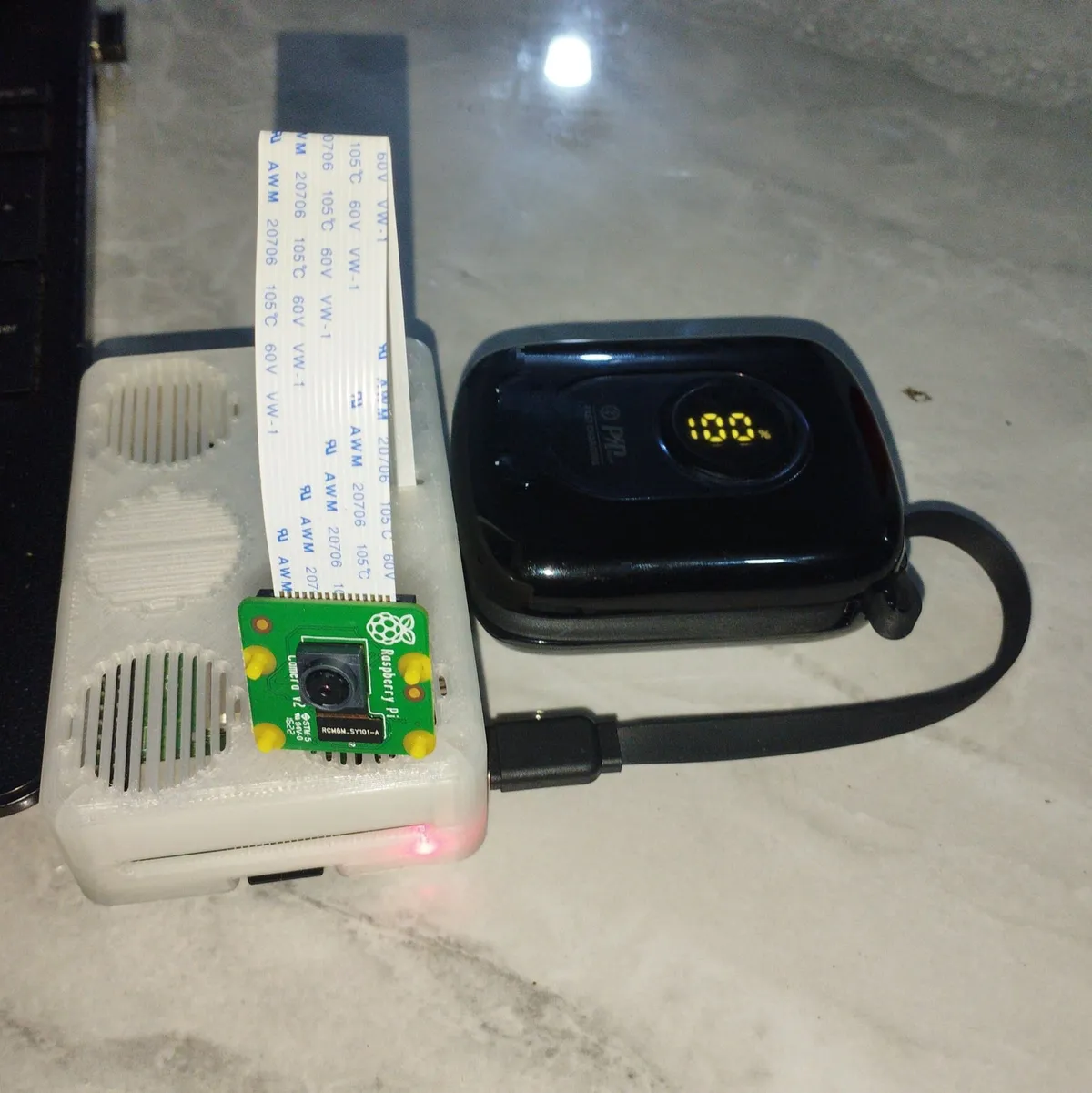
AI4Sight runs on the Docilis Visual Intelligence Engine (DVIE), the vision stack I designed at Docilis Labs. A camera streams frames to a quad-core ARM board. DVIE detects and tracks what's in front of the wearer and turns it into spatial audio. There's no network in the loop.
- 22.4 FPSon-device inference at 8.2 W
- < 14 msaudio latency via ALSA preemption
- 82° FOVmapped to a 5-zone spatial grid
- 0cloud calls
1. Perception
Frames come in through V4L2 into zero-copy shared memory. They're processed by an INT8-quantised YOLOv11n model, small enough for the board and still accurate enough to pick out people, phones, cups, books and desks in cluttered rooms. Each detection is placed in one of five zones from far-left to far-right, so "person, ahead" is something the system can act on.
2. Tracking & motion
Raw detections flicker, and an object on the boundary between two zones made the audio "ping-pong" back and forth. I added ByteTrack for identity and an exponential moving average (α = 0.35) on each track's trajectory. That keeps still objects still and moving ones smooth, and removes the jitter from a head-mounted camera.
3. Audio that knows what matters
Directional audio beacons are written straight to ALSA buffers. When something urgent enters the wearer's stride zone, lower-priority ambient cues are cut off in under 12 ms, so the most important sound is always the one playing.
4. Surviving real hardware
High-current audio spikes on battery power were causing brownouts and kernel panics. A watchdog now polls the board's throttling flags and backs off before the power supply fails. It's an unglamorous fix, and it's what makes the device usable for a whole school day.
We test in the real world. We fail fast, learn faster, and document everything.
What I learned
- On the edge, the model is the easy part. Latency, power and heat decide whether a prototype turns into a product.
- Assistive tech is about what the user feels. Smoothing and prioritising the audio mattered more than raw detection accuracy.
- Documenting every failure publicly made the work better and brought in collaborators.
Read the engineering notes
- Announcing DVIE v1.5: real-world intelligence beyond the cloud
- Teaching AI object permanence & motion
- Squeezing heavy AI onto a $100 chip
Want to collaborate, pilot AI4Sight in a school, or support the work? Get in touch.